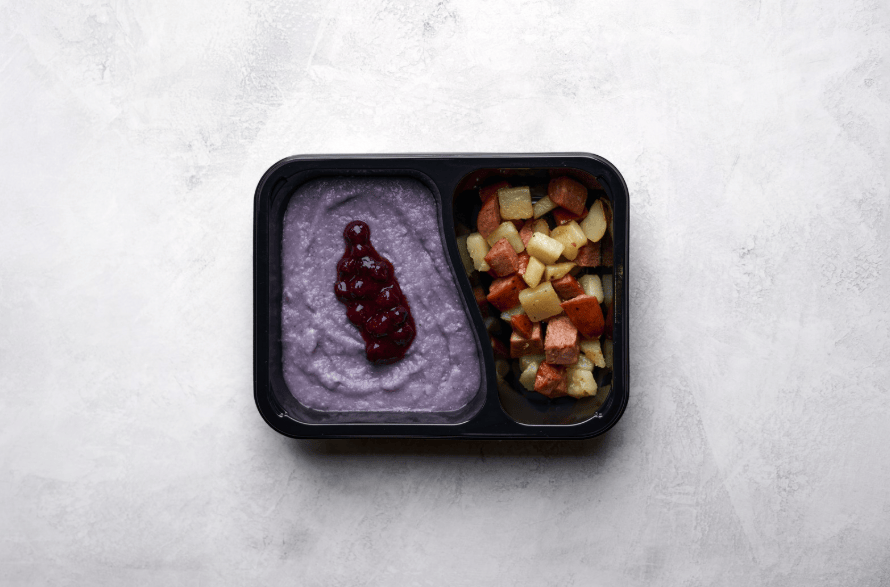
Chilichin apple harvest oatmeal with sumac berries, oatmeal, apples, cranberries, and walnuts. Source: University of Pennsylvania
Home-delivered meals made with traditional Navajo recipes helped heart failure patients stay out of the hospital, according a new study by researchers with the University of Pennsylvania and the Indian Health Service. The results, published in JAMA Internal Medicine offer further support for the Food-is-Medicine movement, whose goal is to integrate nutritional interventions including medically tailored meals, medical nutrition therapy, and nutrition counseling into clinical care for patients with chronic illness, especially those in underserved communities.
Heart failure patients in the Navajo Nation face an increased risk of complications and death compared to other populations. The region also has a high rate of food insecurity, exacerbating these risks. In the Medically Tailored Traditional Food to Optimize Nutrition in Heart Failure (MUTTON-HF) study, researchers compared a home-delivered culturally and medically tailored meal program to typical care for a heart failure patient: a heart healthy diet prepared at home. The investigators tracked outcomes including re-hospitalizations and emergency room visits for 12 weeks.
I interviewed Dr. Lauren Eberly, the lead investigator on the study, for an article in Medscape this summer. Eberly said she laid the groundwork for the study in 2024, when, as part of an Indian Health Service quality improvement initiative, she and her colleagues held listening sessions to learn what barriers were preventing community members from achieving their best health.
“What we heard again and again was this strong desire to return to traditional ways of living, including traditional indigenous foods to advance health,” Eberly said. “There’s this incredible excitement and momentum among Native communities to reclaim traditional pre-contact foods to improve health…The concept of food as medicine is a long-standing belief in Diné (Navajo) culture and many Indigenous communities, in which traditional foods are sacred and healing.”
Western science, too, backs up these beliefs. Diet is known to be a significant factor in heart failure outcomes, and evidence points to huge potential benefits for interventions like medically tailored meals and medically tailored groceries. However, research has not always borne out the expected benefits of those programs. A review of Food-is-Medicine, randomized, controlled trials published last year in the Circulation concluded that most of the 14 RCTs in its sample did not demonstrate an impact on clinical outcomes, possibly due to small sample size, short follow up periods, and lower doses of healthy food.
For the MUTTON-HF study, the investigators took care in making sure the intervention was as robust as possible. They hired a local Navajo dietician and culinary expert to craft the meals and recipes and partnered with local Navajo farmers and ranchers to source meat and produce through Tocabe, a Native-run kitchen, which produced the frozen meals via traditional whole animal utilization and a Native-first supply chain when possible.
The study purchased the meals for $12 each, not including meal R&D, delivery, and distribution costs. Because many of the patients in the study didn’t have physical addresses, they also set up a distribution system with two primary pick-up sites and miniature food hubs for local pick-up or direct home delivery. For patients who lacked appliances and equipment to prepare food, the study provided microwaves, freezers, refrigerators, stoves, and propane. Patients received two meals a day for 60 days, and were free to eat whatever they wanted otherwise.
A sample menu includes meals such as “blue corn mush plate” with bison sausage, potatoes, and butternut squash; garden veggie squash enchilada bowl with beans, squash, New Mexico red chili, and corn tortilla; and three sisters chowder, with squash, beans, corn, potatoes, blue corn, and wild rice. The meals had no added sugar or salt and met criteria for for the AHA’s Heart-Check Food Certification Program nutritional requirements.
After 90 days, the researchers found that 40.6% of patients who received the prepared meals went back to the hospital or emergency room, compared with 57.0% of those receiving usual care—a large and significant difference. Investigators also saw benefits in secondary outcome measures like decreased food insecurity, weight reductions, and lower blood pressure.
“While some of the benefits of the meals are likely due to the low-sodium and low-caloric contents of the meals, we hypothesize that the program’s benefit extends beyond just nutritious content,” Eberly said. “Traditional foods serve as a foundation to strengthen cultural connections and cultural identity, foster intergenerational transfer of knowledge, and reinforce connections to ancestral and other lands, all of which impact holistic health and well-being.”
The Department of Health and Human Services in 2023 developed a Food-is-Medicine initiative to reduce nutrition-related chronic diseases and food insecurity to improve health in the US. Under this initiative, the Indian Health Service awarded $500,000 annually for 5 years to five tribal organizations of design, implement, and evaluate a produce prescription pilot program.
Although the HHS Food-is-Medicine program was developed in response to a 2023 omnibus appropriations bill that includes billions in funding for nutrition, it’s not immediately clear whether other grants have been awarded since then.
Academic and non-profit organizations sponsoring Food is Medicine initiatives and research include the Food is Medicine Coalition, the Tufts Food is Medicine Institute, and the Rockefeller Foundation.
Meanwhile the MUTTON program continues for patients with heart failure at IHS sites, with new pilot programs for other high-risk groups. Eberly and her collaborators continue to analyze data from the trial for benefits to local food systems and cost effectiveness in the hope that these insights will encourage similar programs to be adopted and incorporated into clinical care.
While this specific program would be difficult to implement in other contexts, Eberly said it’s possible that comparable programs could be designed for other marginalized communities. “Food-is-medicine programs in other settings could consider tailoring not only for medical needs but also for the strengths of the food environment through community engaged design.”



 Serendipity